Journal Description
Obesities
Obesities
is an international, peer-reviewed, open access journal on all aspects of obesity published bimonthly online by MDPI.
- Open Access— free for readers, with article processing charges (APC) paid by authors or their institutions.
- High Visibility: indexed within ESCI (Web of Science), Scopus and other databases.
- Rapid Publication: manuscripts are peer-reviewed and a first decision is provided to authors approximately 18.6 days after submission; acceptance to publication is undertaken in 2.2 days (median values for papers published in this journal in the second half of 2025).
- Recognition of Reviewers: APC discount vouchers, optional signed peer review, and reviewer names published annually in the journal.
- Journal Cluster of Food, Nutrition, and Health Science: Beverages, Dietetics, Foods, Nutraceuticals, Nutrients and Obesities.
Impact Factor:
1.3 (2024);
5-Year Impact Factor:
1.2 (2024)
Latest Articles
Rhinorrhea and Hiccups After Bariatric Surgery: Exploring Associations with Psychological and Behavioral Factors
Obesities 2026, 6(1), 13; https://doi.org/10.3390/obesities6010013 (registering DOI) - 8 Feb 2026
Abstract
In our surgical center, we have observed a high occurrence of hiccups and rhinorrhea following bariatric surgery. This retrospective study aimed to assess the frequency of post-prandial hiccups and rhinorrhea following bariatric surgery and explore potential behavioral and clinical associations. The study was
[...] Read more.
In our surgical center, we have observed a high occurrence of hiccups and rhinorrhea following bariatric surgery. This retrospective study aimed to assess the frequency of post-prandial hiccups and rhinorrhea following bariatric surgery and explore potential behavioral and clinical associations. The study was performed at Cannizzaro Hospital (Catania, Italy), an institution accredited by SICOB (Italian Society for Bariatric and Metabolic Surgery) as a national referral center. The cohort included bariatric patients who completed a preoperative psychological evaluation and adhered to a one-year post-surgical follow-up between October 2022 and November 2023. Data on eating behaviors, mental status and dietary habits were collected for each patient before surgery, while clinical records, including the recurrence of hiccups and rhinorrhea, were acquired at the following time points: baseline and 1, 3, 6 and 12 months post-surgery. Post-prandial hiccups and/or rhinorrhea were reported by 49.5% of patients at 1 month and persisted in 46.8% after 12 months. No significant associations were found between the symptoms and weight loss, BES score, or psychological traits, except for slight associations with smoking and carbonated beverage intake. In our cohort, the etiology of hiccups and rhinorrhea appears unrelated to behavioral or psychological factors and may instead reflect vagal hyper-responsiveness after gastric fundus resection.
Full article
Open AccessReview
Vitamin D in Obesity: Mechanisms and Clinical Impact
by
Jitka Jirků, Zuzana Kršáková and Jarmila Křížová
Obesities 2026, 6(1), 12; https://doi.org/10.3390/obesities6010012 - 6 Feb 2026
Abstract
►▼
Show Figures
Obesity is a major global health challenge that substantially affects vitamin D metabolism and status. Numerous studies have consistently demonstrated an inverse relationship between body fat and serum 25-hydroxyvitamin D [25(OH)D] concentrations. Emerging evidence suggests that lower serum 25(OH)D in obesity largely reflects
[...] Read more.
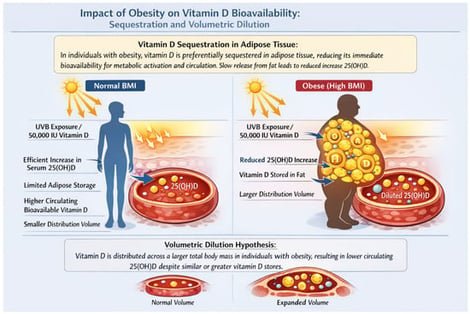
Obesity is a major global health challenge that substantially affects vitamin D metabolism and status. Numerous studies have consistently demonstrated an inverse relationship between body fat and serum 25-hydroxyvitamin D [25(OH)D] concentrations. Emerging evidence suggests that lower serum 25(OH)D in obesity largely reflects altered distribution and metabolism rather than a uniform state of true functional deficiency. Adipose tissue functions both as a storage compartment and as a metabolically active organ capable of modulating vitamin D handling. Mechanisms include the sequestration of vitamin D in fat, volumetric dilution across a larger body mass, and the local expression of enzymes involved in vitamin D metabolism. As a result, obese individuals typically exhibit a blunted increase in serum 25(OH)D in response to supplementation, consistent with altered pharmacokinetics and increased distribution volume. Weight loss, particularly the reduction in visceral fat, is associated with modest increases in circulating 25(OH)D, further supporting a distribution-based mechanism. Although low 25(OH)D levels in obesity have been linked to insulin resistance, inflammation, and metabolic syndrome, randomized controlled trials have not consistently demonstrated that supplementation improves clinically relevant outcomes in this population. Meta-analyses confirm that the increase in serum 25(OH)D after supplementation is smaller in obese individuals, indicating that higher doses are often required to achieve comparable levels to those in normal-weight subjects. Obesity thus represents a major determinant of vitamin D deficiency, highlighting the need for individualized supplementation strategies alongside weight management. Understanding the mechanistic basis for low 25(OH)D in obesity is essential for distinguishing true deficiency from altered distribution, informing clinical decisions, and optimizing interventions to maintain adequate vitamin D status and support metabolic health.
Full article

Figure 1
Open AccessArticle
Psychological Predictors of Poor Weight Loss Following Endoscopic Sleeve Gastroplasty
by
Lino Polese, Sami Schiff, Francesca Moltrer, Anna Chiara Frigo, Luca Prevedello, Giulia Pozza, Alice Albanese, Sabrina Rampado, Alessandro Scarda, Silvia Bettini, Paola Fioretto and Mirto Foletto
Obesities 2026, 6(1), 11; https://doi.org/10.3390/obesities6010011 - 6 Feb 2026
Abstract
Endoscopic sleeve gastroplasty (ESG) does not produce homogeneous results, with some patients showing little weight loss after the procedure. The aim of the present study was to evaluate the ability of pre-procedural psychometric questionnaires to predict insufficient weight loss after ESG in patients
[...] Read more.
Endoscopic sleeve gastroplasty (ESG) does not produce homogeneous results, with some patients showing little weight loss after the procedure. The aim of the present study was to evaluate the ability of pre-procedural psychometric questionnaires to predict insufficient weight loss after ESG in patients with obesity. Patient candidates for ESG were requested to complete the following psychometric questionnaires: Short Form-36 (SF-36), Symptom Checklist-90 Revised (SCL-90-R), Binge Eating Scale (BES), Yale Food Addiction Questionnaire (Y-FAS), Eating Attitude Test-26 (EAT-26), and Barratt Impulsiveness Scale-11 (BIS-11). The results of the psychometric scores were then compared with the ESG outcome, which was considered a therapeutic failure if the %EWL was less than 30% at 12 months after the follow-up. Thirty-five patients (8 males and 27 females, mean age 49 years, range 21–75 years) were included in this study. At the one-year follow-up, the mean %EWL was 40 ± 43%. Male sex and higher preoperative BMI were identified as risk factors for poor weight loss. A logistic regression analysis adjusted for sex and preoperative BMI showed that low scores on the SF-36 (Subscale Mental Health), high scores on the SCL_90-R, and an elevated BES score were predictors of therapeutic failure. The results of the present study seem to confirm the usefulness of the SF-36, SCL-90R, and BES questionnaires in the selection of patients eligible for ESG.
Full article
Open AccessOpinion
Pediatric Use of Compounded GLP-1 Agents: Benefits, Risks, and Equity
by
Lisa Kelly, Robert Siegel and Elizabeth Lanphier
Obesities 2026, 6(1), 10; https://doi.org/10.3390/obesities6010010 - 5 Feb 2026
Abstract
The American Academy of Pediatrics recently revised its guidelines on pediatric obesity treatment to recommend that primary care providers offer anti-obesity medications to patients based on age and body mass index. Anti-obesity medications like glucagon-like peptide-1 receptor agonists (GLP-1 RAs) are efficacious in
[...] Read more.
The American Academy of Pediatrics recently revised its guidelines on pediatric obesity treatment to recommend that primary care providers offer anti-obesity medications to patients based on age and body mass index. Anti-obesity medications like glucagon-like peptide-1 receptor agonists (GLP-1 RAs) are efficacious in lowering body mass index (BMI) and improving metabolic health, including in children. However, although the landscape for medication production and insurance coverage is rapidly evolving, these medications can be difficult to access due to cost, lack of insurance coverage, and supply chain issues. Compounded versions of GLP-1 RAs offer the benefits of providing lower cost and higher availability alternatives to FDA-approved versions. But they include risks associated with less regulated medications. This paper identifies the risks and benefits of compounded GLP-1 RA use in the pediatric population, particularly considering structural inequities in obesity burden and treatment, and offers recommendations for pediatricians to ethically and equitable address compounded GLP-1 RA use with their patients and their families.
Full article
Open AccessArticle
From Prevention to Improvement: Impact of Rigorous Follow-Up on Post-Bariatric Nutritional and Metabolic Status
by
Marcello Agosta, Maria Sofia, Sara D’Amato, Federica Latteri, Giuseppe Nicolò Conti, Martina Bellissimo, Chiara Mazzone, Gaetano La Greca and Saverio Latteri
Obesities 2026, 6(1), 9; https://doi.org/10.3390/obesities6010009 - 3 Feb 2026
Abstract
►▼
Show Figures
Nutritional deficiencies and metabolic alterations are common complications following bariatric surgery, requiring often lifelong monitoring and supplementation. The aim of this retrospective study is to investigate whether a structured follow-up can mitigate micronutrient deficiencies and metabolic changes. This study was conducted at Cannizaro
[...] Read more.
Nutritional deficiencies and metabolic alterations are common complications following bariatric surgery, requiring often lifelong monitoring and supplementation. The aim of this retrospective study is to investigate whether a structured follow-up can mitigate micronutrient deficiencies and metabolic changes. This study was conducted at Cannizaro Hospital (Catania, Italy), a national referral center accredited by SICOB (Italian Society for Bariatric and Metabolic Surgery). The cohort included patients who underwent bariatric surgery who completed one year follow-up between October 2022 and May 2024. Medical records such as anthropometric, clinical and laboratory data were collected for each patient at five different timepoints: baseline, 1-, 3-, 6- and 12-months post-surgery. Serum levels of iron, hemoglobin, vitamin D, folate, vitamin B12 and uric acid were analyzed to assess nutritional and metabolic status over time. One-year follow-up adherence of the patient cohort was equal to 97.5%. A significant increase in serum iron, vitamin D and folate levels was observed one year after surgery. Hemoglobin and vitamin B12 levels remained stable over time. Uric acid showed a significant rise at 1 month after surgery, followed by a progressive reduction by 12 months. This study highlights the importance of a structured follow-up program after bariatric surgery, contributing to the prevention of common postoperative complications.
Full article

Figure 1
Open AccessArticle
Relationship Between Weight Loss and Changes in Oral Function Test Results over 1 Year
by
Ryoko Igashira, Miyuki Yokoi, Mieko Okamoto, Hitomi Sasaki and Mitsuyoshi Yoshida
Obesities 2026, 6(1), 8; https://doi.org/10.3390/obesities6010008 - 17 Jan 2026
Abstract
Weight loss is an indicator of nutritional disorders, is associated with increased morbidity and mortality, and is more likely to be experienced by individuals with fewer teeth. In this study, we examined the relationship between 1-year body weight changes and variations in various
[...] Read more.
Weight loss is an indicator of nutritional disorders, is associated with increased morbidity and mortality, and is more likely to be experienced by individuals with fewer teeth. In this study, we examined the relationship between 1-year body weight changes and variations in various oral function tests. In total, we examined 104 individuals aged 45–84 years (70 men and 34 women) who underwent health check-ups at our hospital in 2023 and 2024. Several oral function tests were performed, and changes over a 1-year period were compared using the Wilcoxon signed-rank test. The rate of change in oral function was compared between individuals who lost ≥5% of their body weight in 1 year and those who did not; no significant differences in body weight and oral function were observed between 2023 and 2024, and no significant differences in the rates of change in oral function or weight loss were observed based on sex and age. The rates of change in occlusal force and masticatory function were significantly correlated with weight loss rates, while no differences were observed in terms of sex or age between those who lost ≥5% of their body weight in 1 year and those who did not; the only significant difference was in occlusal force: weight loss was correlated with occlusal force over 1 year, with individuals who lost ≥5% of their body weight exhibiting significantly lower occlusal force, a risk factor for nutritional disorders.
Full article
Open AccessArticle
Body Composition and Bone Status Through Lifespan in a Greek Adult Population: Establishing Reference Curves
by
Dimitrios Balampanos, Dimitrios Pantazis, Alexandra Avloniti, Theodoros Stampoulis, Christos Kokkotis, Anastasia Gkachtsou, Stavros Kallidis, Maria Protopapa, Nikolaos-Orestis Retzepis, Maria Emmanouilidou, Junshi Liu, Dimitrios Ioannou, Stelios Kyriazidis, Nikolaos Zaras, Dimitrios Draganidis, Ioannis Fatouros, Antonis Kambas, Maria Michalopoulou and Athanasios Chatzinikolaou
Obesities 2026, 6(1), 7; https://doi.org/10.3390/obesities6010007 - 16 Jan 2026
Abstract
►▼
Show Figures
Background/Objectives: Comprehensive knowledge of body composition and bone status across the lifespan is critical for clinical evaluation and public health initiatives. This study aimed to develop age- and sex-specific reference curves for body composition and bone status in a physically active Greek population
[...] Read more.
Background/Objectives: Comprehensive knowledge of body composition and bone status across the lifespan is critical for clinical evaluation and public health initiatives. This study aimed to develop age- and sex-specific reference curves for body composition and bone status in a physically active Greek population aged 18–80 using dual-energy X-ray absorptiometry (DXA). A secondary objective was to examine age- and sex-related trends in fat distribution, lean mass (LM), and bone status. Methods: A cross-sectional analysis was conducted on 637 participants (275 men and 362 women). Physical activity was assessed through structured interviews evaluating type, frequency, and intensity, categorized using established guidelines from organizations such as the American Heart Association and World Health Organization. Anthropometric data and DXA scans were utilized to measure parameters including fat mass (FM), LM, and BMD. Participants were stratified into age categories, and percentile curves were generated using generalized additive models for location, scale, and shape (GAMLSS). Results: Among women, body mass increased by 20.9% and body fat percentage rose by 38.3% from the youngest to the oldest age group, accompanied by a 5.7% reduction in bone mineral density (BMD) and an 11.5% decline in bone mineral content (BMC). Men exhibited a 49.1% increase in body fat percentage, with LM remaining stable across age groups. In men, BMD decreased by 1.7%, while BMC showed minimal variation. Notable sex differences were observed in fat redistribution, with android fat (AF) increasing significantly in older individuals, particularly among women, highlighting distinct age-related patterns. Conclusions: This study provides essential reference data on body composition and bone status, emphasizing the need for tailored interventions to address sex- and age-related changes, particularly in fat distribution and bone density, to support improved health outcomes in aging populations.
Full article

Figure 1
Open AccessArticle
Gender Differences in the Outcomes of Laparoscopic Sleeve Gastrectomy (LSG)
by
Hadar Pinto, Uri Netz, Shahar Atias, Itzhak Avital, Ezeldin Abu-zeid and Zvi H. Perry
Obesities 2026, 6(1), 6; https://doi.org/10.3390/obesities6010006 - 14 Jan 2026
Abstract
►▼
Show Figures
Background: Identifying differences between genders regarding long-term surgical outcomes in bariatric surgeries may be important for optimizing their results. Objective: The current study evaluated mid-term gender-specific differences in patients undergoing laparoscopic sleeve gastrectomy (LSG). Methods: A retrospective cohort study was done in our
[...] Read more.
Background: Identifying differences between genders regarding long-term surgical outcomes in bariatric surgeries may be important for optimizing their results. Objective: The current study evaluated mid-term gender-specific differences in patients undergoing laparoscopic sleeve gastrectomy (LSG). Methods: A retrospective cohort study was done in our university-based hospital, including patients who underwent laparoscopic Sleeve Gastrectomy (LSG) between January 2014 and December 2017. We compared demographics and clinical history (including BMI) before and after surgery, as well as the Bariatric Analysis and Reporting Outcome System (BAROS) and complications. Results: We enrolled 217 patients, 86 of whom were males (39.6%), with an average age of 52 ± 0.8 years. We observed no significant differences between males and females in minimal BMI attained (26.35 ± 4.9 vs. 25.9 ± 4.5 respectively, p = 0.56), total complications rate (p = 0.165), early post-op complication rate (p = 0.158), need for re-operation (p = 0.357), and BAROS score (p = 0.42). Conclusions: LSG outcomes were similar for male and female patients, as measured by BAROS, BMI reduction, and complication rates. Further studies are warranted; however, in the meantime, LSG can be offered to the entire population, regardless of gender-specific considerations.
Full article

Figure 1
Open AccessArticle
Weight Fluctuations from Pregnancy Until 3 Years Postpartum: Timing and Goals for Women’s Weight Management
by
Xinyan Tan, Jie Wang, Zhenyu Yang, Jiaping Tang, Xuehong Pang and Ye Wang
Obesities 2026, 6(1), 5; https://doi.org/10.3390/obesities6010005 - 12 Jan 2026
Abstract
►▼
Show Figures
Background: The prevalence of being overweight and of obesity among women of childbearing age is constantly increasing. Objectives: To analyze the critical periods and goals of women’s weight management from early pregnancy to 3 years postpartum. Methods: Women’s weight was tracked from the
[...] Read more.
Background: The prevalence of being overweight and of obesity among women of childbearing age is constantly increasing. Objectives: To analyze the critical periods and goals of women’s weight management from early pregnancy to 3 years postpartum. Methods: Women’s weight was tracked from the first trimester of pregnancy to 3 years postpartum. We calculated their gestational weight gain (GWG) and postpartum weight retention (PPWR), and used linear mixed models and logistic models to estimate weight change velocities and risk factors associated with overweight/obesity at 1–3 years postpartum. Results: The medians of pre-pregnancy BMI (pre-BMI) and GWG among the 641 participants were 20.1 kg/m2 and 15.0 kg. Among women with pre-BMI < 24 kg/m2, those with excessive GWG remained at higher weights within 1.5 years postpartum than those with appropriate GWG (p < 0.05). Women’s weight decreased from 42 days to 1 year postpartum (β = −0.31 for low pre-BMI, β = −0.24 for normal pre-BMI, both p < 0.05), and remained unchanged from 1 to 3 years (p > 0.05). The rate of being overweight/obese at one year postpartum was mainly associated with pre-pregnancy weight (as a continuous variable, aOR = 1.58, 95%CI: 1.44–1.74) and 1-year PPWR (aOR = 1.78, 95%CI: 1.48–2.15). Compared with women who maintained normal BMI, those who shifted to being overweight/obese had higher pre-BMI and 1-year PPWR (22.6 kg/m2 vs. 20.3 kg/m2, 7.0 kg vs. 1.0 kg, p < 0.01). Conclusions: Normal and relatively low pre-BMI (18.5–22.0 kg/m2) and less than 2.0 kg of 1-year PPWR are goals of women’s weight management.
Full article

Figure 1
Open AccessProtocol
Effectiveness of Metformin in Preventing Type 2 Diabetes in Children and Adolescents with Overweight or Obesity: A Protocol for a Systematic Review and Meta-Analysis
by
Neil Wills, Neeki Derhami, Aadya Makhija, Hayley Patrick, Ava Pourtousi, Jade Asfour, Liam McAlister, Tiago Jeronimo dos Santos and Marina Ybarra
Obesities 2026, 6(1), 4; https://doi.org/10.3390/obesities6010004 - 10 Jan 2026
Abstract
Type 2 diabetes is increasingly prevalent among children and adolescents with overweight or obesity, and although lifestyle interventions remain first-line preventive strategies, long-term adherence and effectiveness are often limited. Metformin has demonstrated efficacy in delaying type 2 diabetes onset in adults at high
[...] Read more.
Type 2 diabetes is increasingly prevalent among children and adolescents with overweight or obesity, and although lifestyle interventions remain first-line preventive strategies, long-term adherence and effectiveness are often limited. Metformin has demonstrated efficacy in delaying type 2 diabetes onset in adults at high risk, but its preventive role in pediatric populations remains unclear. This systematic review and meta-analysis aims to evaluate the effectiveness of metformin, alone or in combination with lifestyle interventions, in preventing or delaying type 2 diabetes among children and adolescents with overweight or obesity. The protocol is registered in PROSPERO (CRD42024615622), MEDLINE (PubMed), Embase, Cochrane Library, Scopus, and Web of Science and will be searched from inception to June 2025. Eligible studies include randomized controlled trials, quasi-experimental studies, and prospective cohort studies involving individuals under 18 years of age. The primary outcome is incidence of type 2 diabetes, with secondary outcomes including fasting plasma glucose, HbA1c, insulin resistance, BMI z-score, adherence, and adverse events. Where appropriate, random-effects meta-analyses will be conducted. This review will synthesize current evidence on metformin for pediatric type 2 diabetes prevention and inform future preventive strategies and clinical decision-making.
Full article
Open AccessArticle
Chronotype and Social Jetlag: Impacts on Nutritional Status and Dietary Intake of University Students
by
Lyandra Deluchi Loch, Gabriela Iber Correa, Isabela Fernandes Araújo, Amanda Portugal, Gabriela Datsch Bennemann, Caryna Eurich Mazur, Guilherme Welter Wendt, Lirane Elize Defante Ferreto, Carolina Panis, Camila Elizandra Rossi, Kérley Braga Pereira Bento Casaril, Gisele Arruda, Léia Carolina Lucio, Cleide Viviane Buzanello, Geraldo Emílio Vicentini, Claudiceia Risso Pascotto, Aedra Carla Bufalo Kawassaki, Ana Paula Vieira, Dalila Moter Benvegnú, Franciele Ani Caovilla Follador and Mariana Abe Vicente Cavagnariadd
Show full author list
remove
Hide full author list
Obesities 2026, 6(1), 3; https://doi.org/10.3390/obesities6010003 - 9 Jan 2026
Abstract
The circadian cycle regulates metabolism in response to external stimuli, such as light exposure, sleep schedules, and eating patterns. However, misalignment between internal biological rhythms and social demands can compromise food choices, potentially leading to overweight and obesity. This research aimed to assess
[...] Read more.
The circadian cycle regulates metabolism in response to external stimuli, such as light exposure, sleep schedules, and eating patterns. However, misalignment between internal biological rhythms and social demands can compromise food choices, potentially leading to overweight and obesity. This research aimed to assess how a person’s chronotype links to social jet lag (SJL), which in turn would relate to their nutritional status and food consumption patterns as a university student. 617 students from a State University located in the State of Paraná, Brazil, completed a cross-sectional research study that collected sociodemographic information/anthropometrics by means of an online survey. It included self-reported height/weight data and dietary habits. The Munich Chronotype Questionnaire (MCTQ) was utilized to determine each participant’s chronotype classification and SJL calculation. Researchers found that nearly half of the students (49.3%) displayed an Intermediate Chronotype, which is associated with a diet that contained elements of the “Mixed” Diet, meaning there are equal portions of healthy food (Fresh Fruits, Beans, etc.) and unhealthy foods (Sweetened Beverages). The multivariate logistic regression analyses identified age as a significant predictor of obesity risk (OR: 1.15, p < 0.001), while dietary habits such as fruit consumption played a protective role. Additionally, having a breakfast protected them from being classified as obese compared to those who did not eat breakfast (OR = 0.59). Contrary to expectations, late-night supper was not a statistically significant predictor in the adjusted model. Predictors of an Intermediate chronotype included being male and eating morning snacks regularly. The results of this study suggest that students with an intermediate chronotype will predictably have skewed eating patterns, such as skipping breakfast and eating late—both of which affect obesity risks. Nutritional strategies for university students should focus on promoting circadian regularity and optimizing meal timing.
Full article
(This article belongs to the Topic Dietary Habits in Liver Health and Disease: Preclinical and Clinical Studies)
►▼
Show Figures

Figure 1
Open AccessArticle
Patient Outcomes Under Varying Engagement Patterns on Real-World Lifestyle-Supported Pharmacological Weight-Loss Therapy
by
Louis Talay, Gerónimo Petrel, Neera Ahuja and Amit Tiroshi
Obesities 2026, 6(1), 2; https://doi.org/10.3390/obesities6010002 - 7 Jan 2026
Abstract
►▼
Show Figures
Overweight and obesity represent a significant global health challenge, requiring comprehensive, long-term approaches. Digital weight-loss services (DWLSs) have emerged as promising obesity care models, as they facilitate access to continuous multidisciplinary care. This study aimed to evaluate 12-month weight-loss and adherence patterns in
[...] Read more.
Overweight and obesity represent a significant global health challenge, requiring comprehensive, long-term approaches. Digital weight-loss services (DWLSs) have emerged as promising obesity care models, as they facilitate access to continuous multidisciplinary care. This study aimed to evaluate 12-month weight-loss and adherence patterns in a large unsubsidized DWLS in the UK, which combined lifestyle therapy with semaglutide treatment. A retrospective cohort design was used to analyze data from 7279 patients who initiated treatment between 1 January 2023, and 1 May 2024. Of these patients, 1678 (23.05%) met all criteria for inclusion in the efficacy estimand, which included receiving a minimum of 8 medication orders and submitting weight data within 341–379 days after program initiation. The efficacy estimand achieved a mean weight loss of 15.67%, with 92.49% losing a clinically meaningful amount of weight (≥5%). A strong positive association was found between weight tracking frequency and weight loss, to the extent that a percentage discrepancy of 8.41 points was observed between patients who tracked on less than 20 occasions (Median = 11.83%) and those who tracked at least 100 times (Median = 20.24%). A significant association between weight loss and semaglutide orders was also observed, with a clear distinction existing between patients who received less than 12 orders, and those who received 12 or more orders. Patients whose DWLS experience was supplemented with Wegovy recorded significantly higher mean weight loss than those who were treated with Ozempic (17.68% vs. 14.72%). The findings highlight the importance of program engagement in DWLS outcomes and suggest the need for a comparative analysis of unsubsidized and subsidized services. The study is limited by its real-world observational design and reliance on self-reported data; future research should compare outcomes between unsubsidized and subsidized DWLS cohorts.
Full article

Figure 1
Open AccessArticle
The Interplay Between Insulin Resistance, Affective Dysregulation, and Binge Eating in Obesity: Toward an Integrated Biopsychosocial Treatment Model
by
Luna Carpinelli, Carolina Amato, Daniela Abate Marinelli, Giovanna Stornaiuolo and Giulia Savarese
Obesities 2026, 6(1), 1; https://doi.org/10.3390/obesities6010001 - 3 Jan 2026
Abstract
Background: Obesity is increasingly recognized as a complex condition characterized by the convergence of metabolic dysregulation and psychological vulnerability. Insulin resistance (IR) has been identified as a biological bridge linking metabolic imbalance with affective symptoms such as anxiety, depression, and disordered eating behaviors.
[...] Read more.
Background: Obesity is increasingly recognized as a complex condition characterized by the convergence of metabolic dysregulation and psychological vulnerability. Insulin resistance (IR) has been identified as a biological bridge linking metabolic imbalance with affective symptoms such as anxiety, depression, and disordered eating behaviors. Methods: Fifteen obese adults (mean age = 25 ± 4.3 years) were evaluated through clinical examination, anthropometric assessment (BMI), biochemical assays (fasting insulin, AST, ALT), and standardized psychological assessments (STAI, BDI-II). In parallel, a rapid systematic review (2019–2025) synthesized evidence on the association between IR, affective dysregulation, binge eating disorder (BED), and the clinical role of insulin-sensitizing or incretin-based therapies. Results: Participants exhibited marked hyperinsulinemia (M = 79 μU/mL, SD = 6.61) and elevated anxiety (STAI-Trait = 54.22 ± 22.4) and depression scores (BDI-II = 21.6 ± 7.5). Liver enzymes were within normal limits. Literature synthesis confirmed consistent associations between IR, mood symptoms, and BED, associated with biological processes including inflammation, HPA axis hyperactivity, and dopaminergic imbalance. Integrated treatment approaches combining cognitive-behavioral therapy, medical nutrition therapy, and insulin-sensitizing agents (metformin, GLP-1RA, and GLP-1/GIP RA) were supported as effective and safe options. Conclusions: The coexistence of insulin resistance and emotional dysregulation in obesity is consistent with the hypothesis of a bidirectional metabolic–emotional axis. Early, integrated interventions addressing both metabolic and psychological domains may improve clinical outcomes and reduce progression toward chronic metabolic and psychiatric comorbidity.
Full article
(This article belongs to the Special Issue Obesity and Its Comorbidities: Prevention and Therapy 2026)
Open AccessArticle
Is Crime Associated with Obesity and High Blood Pressure? Repeated Cross-Sectional Evidence from a Peruvian Study
by
Rosmery Ramos-Sandoval, Janina Bazalar Palacios, Milagros Leonardo Ramos, Emily Baca Marroquín, Arelly Fernanda Vega Peche and Nicolas Ismael Alayo Arias
Obesities 2025, 5(4), 95; https://doi.org/10.3390/obesities5040095 - 17 Dec 2025
Abstract
Violence is an emerging social determinant of health in Latin America; however, empirical evidence from Peru remains limited. This study examined the association between crime rates and the prevalence of obesity and high blood pressure in Peru from 2019 to 2023. Using a
[...] Read more.
Violence is an emerging social determinant of health in Latin America; however, empirical evidence from Peru remains limited. This study examined the association between crime rates and the prevalence of obesity and high blood pressure in Peru from 2019 to 2023. Using a repeated cross-sectional design with department–year aggregates, we analyzed nationally representative data from the Demographic and Family Health Survey, adjusting for sociodemographic, mental health, and geographic factors. Regional statistics on crime were incorporated into the analysis. The findings revealed a significant association between higher levels of crime and increased prevalence of self-reported high blood pressure and obesity. The association with obesity was particularly pronounced in border regions such as Tumbes, Madre de Dios, and Callao, where criminal activity is more prevalent. The findings indicate that prolonged exposure to violence may negatively impact biological stress responses, limit physical activity, and encourage the emergence of detrimental behaviors, consequently increasing the cardiometabolic risk burden in affected populations.
Full article
(This article belongs to the Special Issue Obesity in the 21st Century: Public Health Perspectives and Population Solutions)
►▼
Show Figures

Figure 1
Open AccessArticle
Assessment of Dietary Protein Sources Among Post-Sleeve Gastrectomy Patients in Saudi Arabia
by
Mashael T. Kharnoub, Randah M. Alqurashi, Samar M. Abdalla and Sultan Al Temyatt
Obesities 2025, 5(4), 94; https://doi.org/10.3390/obesities5040094 - 16 Dec 2025
Abstract
Obesity is a significant global health challenge, with prevalence rising steadily worldwide. Effective management often involves bariatric surgery, such as sleeve gastrectomy (SG), which has proven effective in reducing weight and improving comorbid conditions. This study aimed to evaluate nutritional status and protein
[...] Read more.
Obesity is a significant global health challenge, with prevalence rising steadily worldwide. Effective management often involves bariatric surgery, such as sleeve gastrectomy (SG), which has proven effective in reducing weight and improving comorbid conditions. This study aimed to evaluate nutritional status and protein source awareness and its impact on muscle mass among patients post SG surgery in Saudi Arabia. A cross-sectional study was conducted among 98 adults (aged 18–51 years) who underwent SG at the Department of Metabolic and Bariatric Surgery (Badana Clinic)/Mouwasat Hospital in Dammam from December 2023 to February 2024. Data were collected using an electronic questionnaire that covered demographics, dietary habits, physical activity, protein knowledge (from food and supplements), and a 24 h dietary recall. Body composition, including muscle mass, was assessed using the InBody270 Body Composition Analyzer. The results revealed that participants exhibited a high level of awareness regarding the importance of protein sources. However, muscle mass decreased by an average of 4.11 kg after surgery. This decline was attributed to insufficient protein intake, which ranged between 30 and 60 g per day, below recommended levels. Taste aversion and dietary limitations post-surgery contributed to this inadequate protein consumption. In conclusion, while participants understood the significance of protein for muscle maintenance, practical challenges in achieving adequate protein sources led to muscle mass loss. These findings underscore the importance of tailored nutritional strategies and education to optimize recovery and long-term health outcomes for SG surgery patients.
Full article
Open AccessArticle
Anthropometric Indicators of Obesity as Screening Tools for Hypertriglyceridemia in Older Adults: A Cross-Sectional Study
by
Max Wolfgang Farias Paiva, Caio Felipe de Sousa Miranda, Gabriel Alves Godinho, Carlos Daniel Dutra Lopes, Tony Souza Queiroz, Débora Jesus da Silva, Sabrina da Silva Caires, Paulo da Fonseca Valença Neto, Claudio Bispo de Almeida, Cezar Augusto Casotti, Beatriz Cardoso Roriz, Francisco Dimitre Rodrigo Pereira Santos, Octavio Luiz Franco, Danieli Fernanda Buccini, Arthur Barros Fernandes, Hellen Dayanny Ferreira Silva Pinheiro and Lucas dos Santos
Obesities 2025, 5(4), 93; https://doi.org/10.3390/obesities5040093 - 14 Dec 2025
Abstract
►▼
Show Figures
Background: Hypertriglyceridemia is a lipid disorder characterized by elevated plasma triglyceride levels, and its prevalence increases with aging. This condition contributes substantially to morbidity and mortality in older adults. In settings with limited access to laboratory testing, especially in developing countries such as
[...] Read more.
Background: Hypertriglyceridemia is a lipid disorder characterized by elevated plasma triglyceride levels, and its prevalence increases with aging. This condition contributes substantially to morbidity and mortality in older adults. In settings with limited access to laboratory testing, especially in developing countries such as Brazil, identifying low-cost and easily applicable screening tools is essential. Objective: To investigate the discriminatory capacity of anthropometric indicators of obesity for screening hypertriglyceridemia in older adults. Methods: A population-based cross-sectional study was conducted with 223 community-dwelling older adults (57% women). Independent variables included body mass index (BMI), waist circumference (WC), abdominal circumference (AC), triceps skinfold thickness (TSF), body adiposity index (BAI), waist-to-hip ratio (WHR), waist-to-height ratio (WHtR), and conicity index (CI). Hypertriglyceridemia was defined as triglyceride levels ≥ 150 mg/dL. Discriminatory performance was assessed using receiver operating characteristic (ROC) curves, and associations were examined using Poisson regression with robust variance. Results: The prevalence of hypertriglyceridemia was 35%. Among older men, AC and CI showed the highest sensitivities (88.90% and 77.40%), while WHR and BMI demonstrated the highest specificities (83.10% and 76.90%). In older women, AC and BMI had the highest sensitivities (95.70% and 87.20%), whereas CI and WHtR exhibited the highest specificities (72.50% and 68.80%). All anthropometric indicators were positively associated with hypertriglyceridemia after adjustment for confounders. Conclusions: AC and CI demonstrated the strongest discriminatory capacity for screening older men with a higher probability of presenting hypertriglyceridemia, while AC and BMI showed the greatest discriminatory capacity among older women. In contrast, WHR and BMI had the highest ability to rule out the condition in older men, whereas CI and WHtR performed this role more effectively in older women. These findings show that low-cost anthropometric indicators can be used in a complementary manner, combining the most sensitive and the most specific measures to support an optimized triage process for hypertriglyceridemia in older adults, particularly in resource-limited settings.
Full article

Figure 1
Open AccessReview
Genetic and Epigenetic Modifiers of Ketogenic Diet Responses: Roles of Sex and Age
by
Marko Sablić, Viktoria Čurila, Senka Blažetić, Marta Balog, Marija Heffer, Antonio Kokot and Vedrana Ivić
Obesities 2025, 5(4), 92; https://doi.org/10.3390/obesities5040092 - 10 Dec 2025
Abstract
►▼
Show Figures
The ketogenic diet (KD) is a metabolic intervention characterized by high fat and very low carbohydrate intake, showing significant metabolic, neuroprotective, and therapeutic effects. However, its efficacy varies widely due to individual genetic and epigenetic factors. This review synthesizes current knowledge of genes
[...] Read more.
The ketogenic diet (KD) is a metabolic intervention characterized by high fat and very low carbohydrate intake, showing significant metabolic, neuroprotective, and therapeutic effects. However, its efficacy varies widely due to individual genetic and epigenetic factors. This review synthesizes current knowledge of genes most strongly associated with KD response, including polymorphisms in FTO, APOA2, PPAR, SCN1A, KCNQ2, STXBP1, CDKL5, the MODY gene group, and SLC2A1, which shape outcomes across lipid metabolism, energy expenditure, inflammation, and neurotransmission. Epigenomic modifications induced by a KD, such as changes in DNA methylation and histone acetylation involving BDNF, SLC12A5, KLF14, and others, modulate functional metabolic and neurological effects. Sex and age further modulate KD effects through distinct patterns of gene activation and hormonal interactions. These variables together impact metabolic and neurological outcomes and are critical for developing personalized nutrition and disease management strategies. Based on the reviewed evidence, genetic and epigenetic profiling can help identify patients who are likely to benefit from a KD (e.g., GLUT1DS, PDH deficiency) and those in whom a KD may be ineffective or harmful (e.g., SCOT or SLC2A1-independent defects). The review concludes that genetic and epigenetic profiling is recommended for personalized dietary interventions.
Full article

Graphical abstract
Open AccessArticle
The Interplay of Diet, Lifestyle, and Metabolic Risk Among Saudi Adults with Metabolic Syndrome
by
Maryam S. Hafiz, Wala I. Alzahrani, Sarah N. Alsharif, Doaa A. Alyoubi, Amal M. Alrizqi and Hanan Alwassam
Obesities 2025, 5(4), 91; https://doi.org/10.3390/obesities5040091 - 8 Dec 2025
Abstract
Metabolic syndrome (MetS) is a multifactorial condition characterized by central obesity, hypertension, dyslipidaemia, and hyperglycaemia, predisposing individuals to cardiovascular disease and type 2 diabetes. This cross-sectional study investigated the relationship between dietary intake, sociodemographic factors, and components of MetS among Saudi adults aged
[...] Read more.
Metabolic syndrome (MetS) is a multifactorial condition characterized by central obesity, hypertension, dyslipidaemia, and hyperglycaemia, predisposing individuals to cardiovascular disease and type 2 diabetes. This cross-sectional study investigated the relationship between dietary intake, sociodemographic factors, and components of MetS among Saudi adults aged 30 years and older attending King Abdulaziz University Hospital. Fifty-three participants meeting MetS diagnostic criteria were assessed through anthropometric measurements, biochemical markers, and two-day dietary recalls analyzed using MyFood24 software. Descriptive and correlation analyses were conducted using SPSS 26.0. The majority of participants (73.6%) were aged over 50 years, were obese (75.5%), and exhibited a high waist circumference (94.3%). Low fibre (6.6 g/day) and high fat (41.8 g/day) intake patterns were evident. Salt intake showed a significant inverse correlation with systolic blood pressure (ρ = −0.36, p < 0.01), potentially reflecting under-reporting or dietary adjustments following diagnosis. Higher BMI correlated positively with waist circumference and diastolic pressure, while frequent physical activity correlated negatively with these parameters. These findings emphasize the influence of diet and lifestyle on metabolic risk and underscore the need for culturally tailored interventions promoting balanced macronutrient intake, increased fibre consumption, and enhanced physical activity to mitigate MetS prevalence among Saudi adults.
Full article
(This article belongs to the Special Issue Obesity and Its Comorbidities: Prevention and Therapy 2026)
Open AccessArticle
Evaluating Dose Titration in Semaglutide and Tirzepatide for Weight Loss: A Retrospective Academic Call Center Study
by
Goar Alvarez, Lianette Veliz, Stephanie Michaels, David Pino and Jun Wu
Obesities 2025, 5(4), 90; https://doi.org/10.3390/obesities5040090 - 5 Dec 2025
Abstract
Obesity affects approximately 40% of U.S. adults and is associated with increased cardiometabolic risk. While lifestyle interventions remain fundamental, pharmacologic therapies such as Semaglutide and tirzepatide have demonstrated significant weight reduction in clinical trials when titrated to maintenance doses. However, real-world adherence to
[...] Read more.
Obesity affects approximately 40% of U.S. adults and is associated with increased cardiometabolic risk. While lifestyle interventions remain fundamental, pharmacologic therapies such as Semaglutide and tirzepatide have demonstrated significant weight reduction in clinical trials when titrated to maintenance doses. However, real-world adherence to recommended titration schedules remains unclear. This retrospective observational study evaluated adults prescribed Semaglutide (Wegovy®) or Tirzepatide (Zepbound®) for weight management between January 2021 and April 2025 through ICUBAcares, a pharmacist-led call center. Primary outcomes included the proportion of patients reaching the recommended maintenance dose and time required to do so. Secondary outcomes examined prescriber specialty patterns and monthly plan costs for non-optimized dosing. Among 739 medication courses, 52.9% of Semaglutide users reached the 2.4 mg dose versus 77.6% of tirzepatide users reaching 15 mg (p < 0.001). Median time to maintenance was significantly shorter for tirzepatide (32 days) than Semaglutide (143 days) (p < 0.001). Endocrinologists had the highest success rate for Tirzepatide (88.2%), while family medicine had the highest volume for both. Non-optimized dosing was associated with higher estimated monthly plan costs. These findings underscore the importance of improving adherence to titration protocols in real-world settings to maximize both clinical and economic outcomes in obesity pharmacotherapy.
Full article
(This article belongs to the Special Issue Obesity and Its Comorbidities: Prevention and Therapy 2026)
►▼
Show Figures

Figure 1
Open AccessArticle
Trends in Anthropometric and Cardiometabolic Risk Factor Changes Among Health Professionals: A 3-Year Follow-Up Study in Taiwan
by
Yi-Ru Chen, Nain-Feng Chu, Der-Min Wu and Wen-Chuan Shen
Obesities 2025, 5(4), 89; https://doi.org/10.3390/obesities5040089 - 4 Dec 2025
Abstract
Objectives: The purpose of this study is to evaluate the trend of anthropometric and cardiometabolic risk (CMRs) changes among health professionals over a three-year period at a medical center in Taiwan. Study Design: A 3-year follow-up cohort study design. Methods: This cohort study
[...] Read more.
Objectives: The purpose of this study is to evaluate the trend of anthropometric and cardiometabolic risk (CMRs) changes among health professionals over a three-year period at a medical center in Taiwan. Study Design: A 3-year follow-up cohort study design. Methods: This cohort study was conducted from 2019 to 2022 in a single healthcare center. The participants underwent annual physical check-ups for three consecutive years. CMRs were measured using standard methods and weight status change was measured using BMI. We used McNemar test and Wilcoxon Sign Rank test to evaluate the differences within and between subgroups. We used logistic regression to examine the risk of increased CMRs among subgroups of different weight status changes. Results: A total of 2217 participants (1641 females and 576 males) were included in this study, with a mean age of 40.2 ± 10.2 years. During this period, 72 (4.4%) female participants’ weight status changed from normal weight to overweight or obese and 530 (32.3%) remained overweight or obese. Among males, the proportion was 6.8% and 61.1%, respectively (p < 0.01). Participants who remained overweight or obese have more adverse CMRs. Compared to remained normal weight male subjects, the mean systolic blood pressure (131.0 ± 18.1 mmHg) and fasting blood glucose (94.4 ± 13.5 mg/dL) were higher in remained overweight or obese subjects (p < 0.001). Among females, those who remained overweight or obese have 4.01 (95% CI 2.92–5.51) times higher risk for abnormal diastolic blood pressure and 2.98 (95% CI 2.05–4.32) times higher risk for abnormal blood glucose compared to those with remained normal weight. Conclusions: Participants who remained overweight or became obese had more adverse CMRs such as high blood pressure, hyperglycemia, and dyslipidemia during the 3-year follow-up period.
Full article
Highly Accessed Articles
Latest Books
E-Mail Alert
News
Topics
Topic in
Behavioral Sciences, Children, Healthcare, IJERPH, JFMK, Obesities
The Effect of Physical Activity on the Population's Health
Topic Editors: Stefania Paduano, Federica ValerianiDeadline: 31 August 2026
Topic in
Geriatrics, IJMS, Life, Sports, Neurology International, Obesities
Exercise and Human Aging: Physiological and Psychological Functions
Topic Editors: Samuel Da Silva Aguiar, Ismael Perez-SuarezDeadline: 20 September 2026
Topic in
Nutrients, Metabolites, Healthcare, Children, Obesities, Life
Non-Communicable Diseases Silent Killer: Metabolic and Obesity Risks of Sedentary Behaviors
Topic Editors: Kotsedi Daniel Monyeki, Machoene Derrick SekgalaDeadline: 30 September 2026
Topic in
Dietetics, Nutrients, Obesities, Diseases, IJMS, Metabolites
Dietary Habits in Liver Health and Disease: Preclinical and Clinical Studies
Topic Editors: Evelyn Nunes Goulart Da Silva Pereira, Rosane Harter Griep, Anissa DaliryDeadline: 31 December 2026
Special Issues
Special Issue in
Obesities
Obesity in the 21st Century: Public Health Perspectives and Population Solutions
Guest Editors: Ritesh Chimoriya, Kritika RanaDeadline: 31 March 2026
Special Issue in
Obesities
Novel Technology-Based Exercise for Childhood Obesity Prevention
Guest Editors: Alessandra Amato, Sara BaldassanoDeadline: 31 May 2026
Special Issue in
Obesities
The Impact of Food Compounds on Obesity Mechanisms
Guest Editor: Nobuyuki TakahashiDeadline: 30 June 2026
Special Issue in
Obesities
Obesity and Its Comorbidities: Prevention and Therapy 2026
Guest Editor: Carmine FinelliDeadline: 30 June 2026